
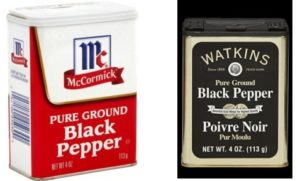


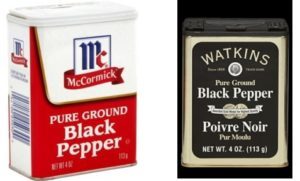
On October 17, 2016, a US federal trial court in the District of Columbia ruled that a competitor may pursue a Lanham Act claim for false advertising due to a container of black pepper. Watkins Inc. v. McCormick & Co., Inc., Case No. 1:15-cv-2188 (ESH) (D.D.C. Oct. 17, 2016) (2016 WL 6078250). In ruling on a motion to dismiss, the court found that the “size of a package signals to the consumer vital information about a product and is as influential in affecting a customer’s choices as an explicit message on its surface.” Watkins Mem. Op., Case No. 1:15-cv-2188.
Background
Standing
False Advertising Under the Lanham Act
FDA Regulations and Consumer Confusion
A container that does not allow the consumer to fully view its contents shall be considered to be filled as to be misleading if it contains nonfunctional slack-fill. Slack-fill is the difference between the actual capacity of a container and the volume of product contained therein. Nonfunctional slack-fill is the empty space in a package that is filled to less than its capacity for reasons other than:
(1) Protection of the contents of the package;
(2) The requirements of the machines used for enclosing the contents in such package; and
(3) Unavoidable product settling during shipping and handling;
21 C.F.R. § 100.100(a). Therefore, the court reasoned, “nonfunctional slack-fill is considered deceptive as a matter of law, so there is nothing implausible about allegations of actual, widespread deception among McCormick’s customers.”
Considerations
Although this case is only in the early stages, companies selling products where consumers cannot see the contents may wish to review their packaging.